Jacmel
Jacmel is a historic town in southern Haiti recognized for its role in Haiti’s cultural and artistic history, particularly through Kanaval. This page presents images documenting the town and its traditions.
The town's name is derived from its indigenous Taíno name of Yaquimel. In 1925, Jacmel was dubbed as the "City of Light," becoming the first in the Caribbean to have electricity.
The city was developed to boost sugar production and trade, but soon it evolved into a coffee trading centre. In 1896 it suffered a major fire that destroyed most of the buildings in the city. The city was rebuilt, often using prefabricated cast-iron pillars and balconies shipped from France. Many ornate mansions of wealthy coffee merchants from this time have been preserved up to this day without much change and the whole central part of the city has changed little over the last 100 years
Kanaval
Kanaval in Jacmel is organized around distinct characters, each carrying social, political, and historical meaning.
Lanse Kod
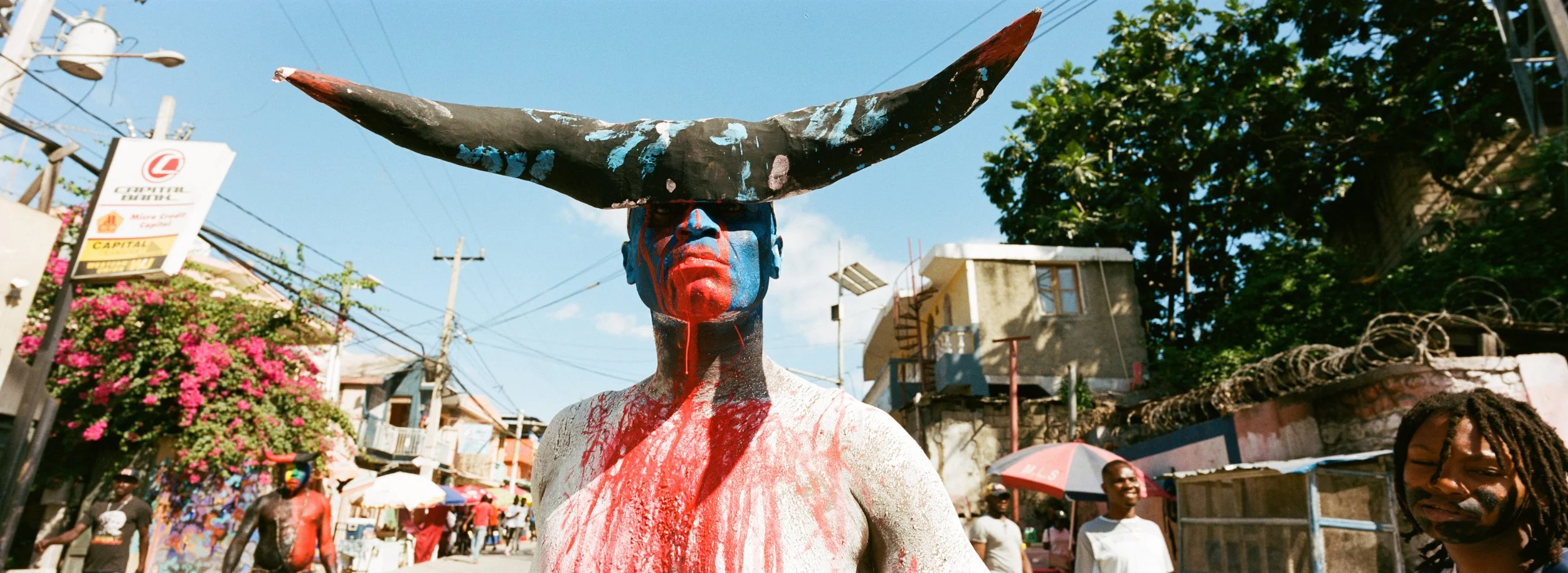
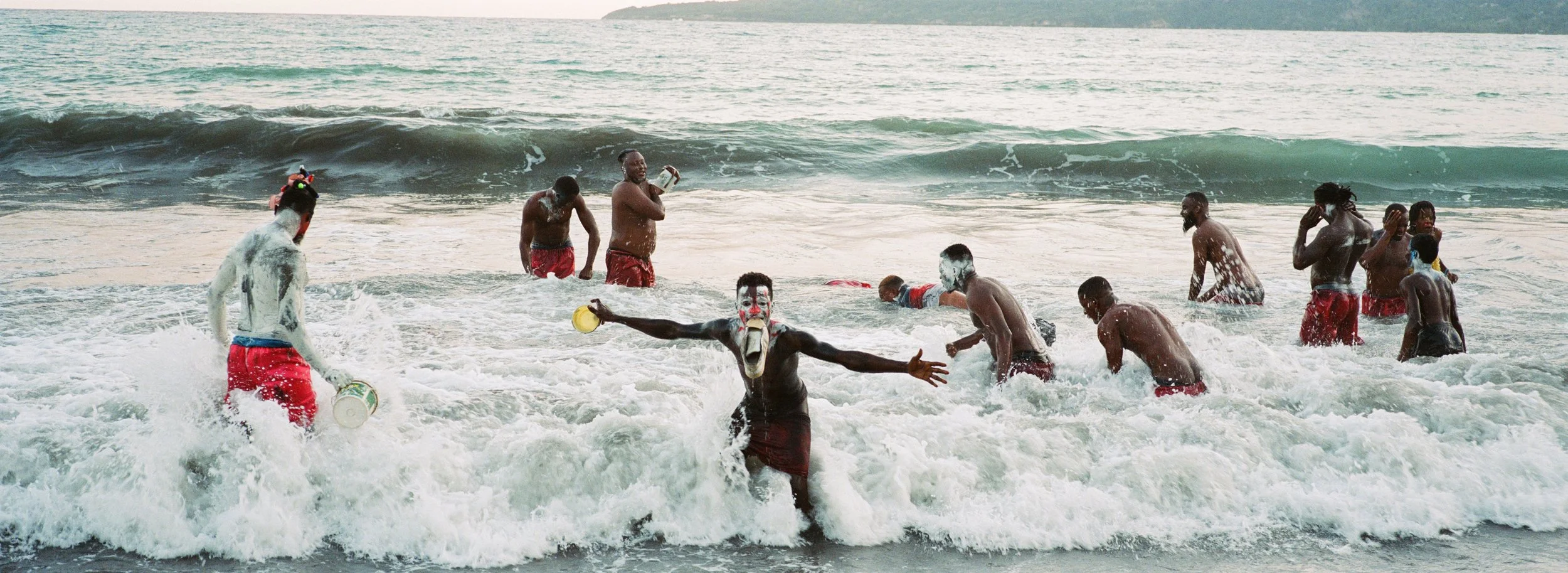
Lanse Kòd is a Kanaval character rooted in histories of enslavement, resistance, and public discipline, performed through the embodied act of rope-throwing in the streets of Jacmel. It was created under the demands of Jacmel who wanted to have their children to stop wetting their bed in the 1940’s. Later, in the 1970’s, “Dieujuste”and “Masseant” were the most important performers, they intensified the fear for the kids, they would wait by the church to scare the children.
Yawe
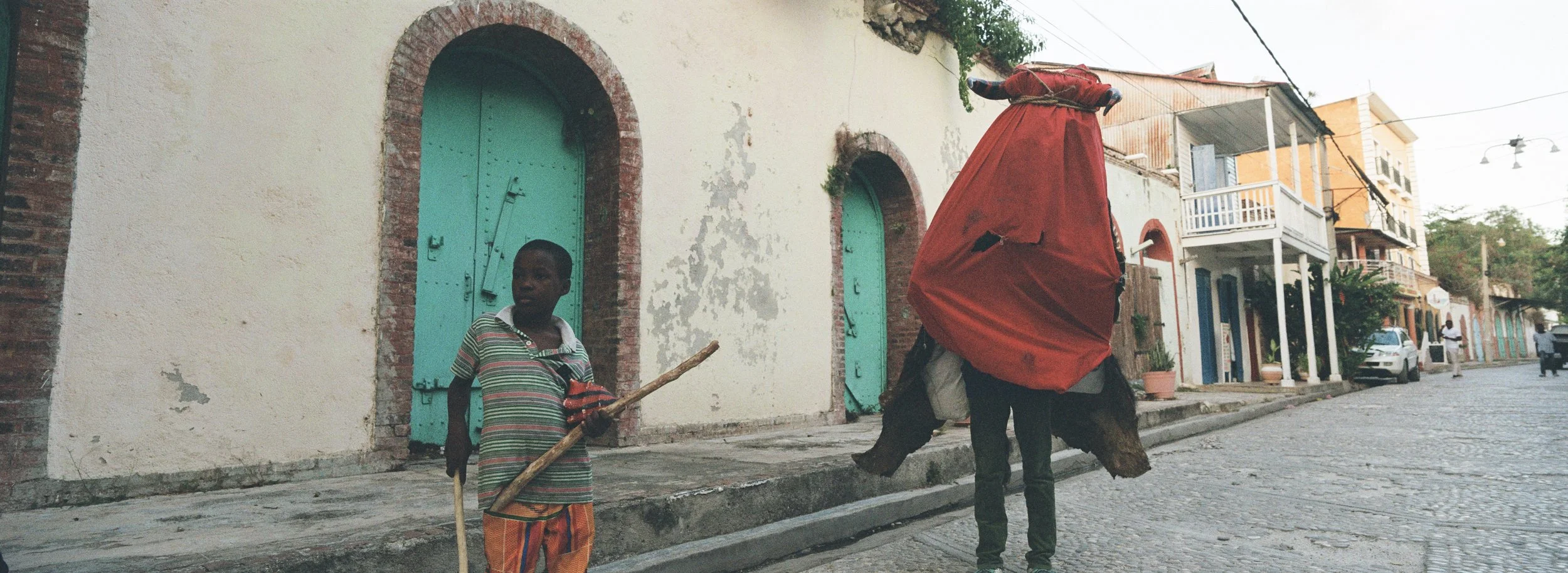
Yawe was a satirical character created against the Jewish merchants of Jacmel, who were very influential economically. They created this mask out of jealousy.
Zel Mathurin
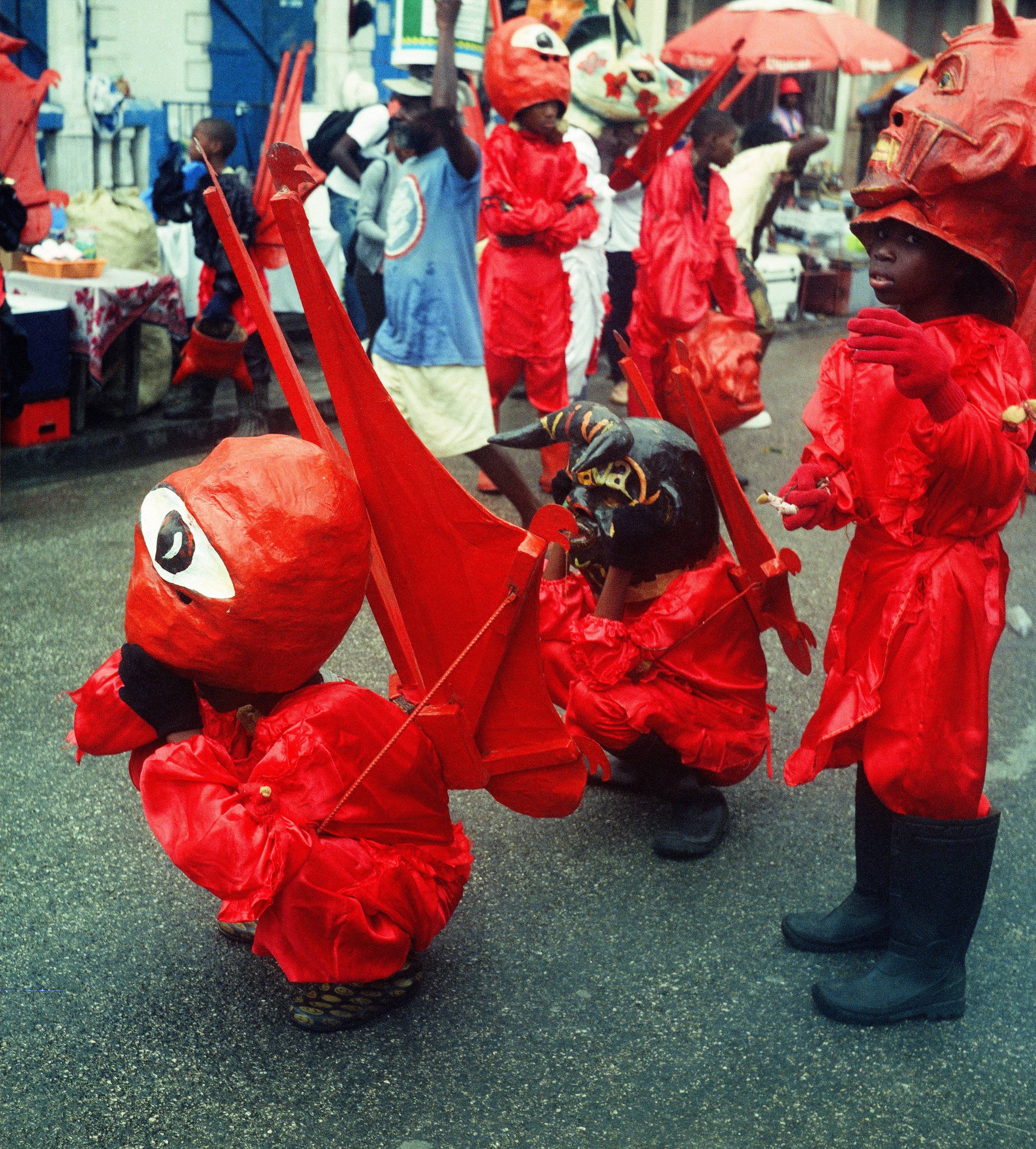
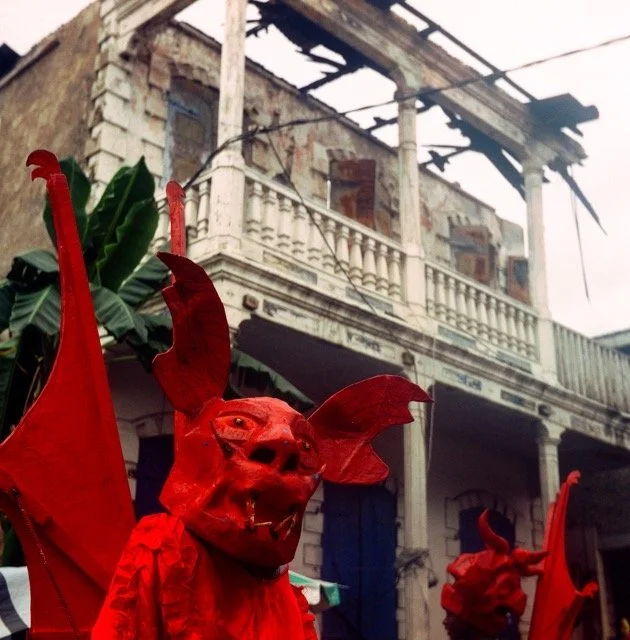
Zel Mathurin is a disguise created by Mathurin Gousse who was a student in Germany after the 2nd World War. He assisted at the famous opera MEPHISTOLES of the Italian composer, Boito, and was very impressed by the Deus ex-machina representing Lucifer. So, when he came back to Jacmel for the carnival, he presented for the first time this disguise during the carnival of the 1950's. Since, this mask is one of the best successful symbol of the Jacmelian's carnival.
Animals